Sports / U.S. model
2025 Chevrolet Corvette Review
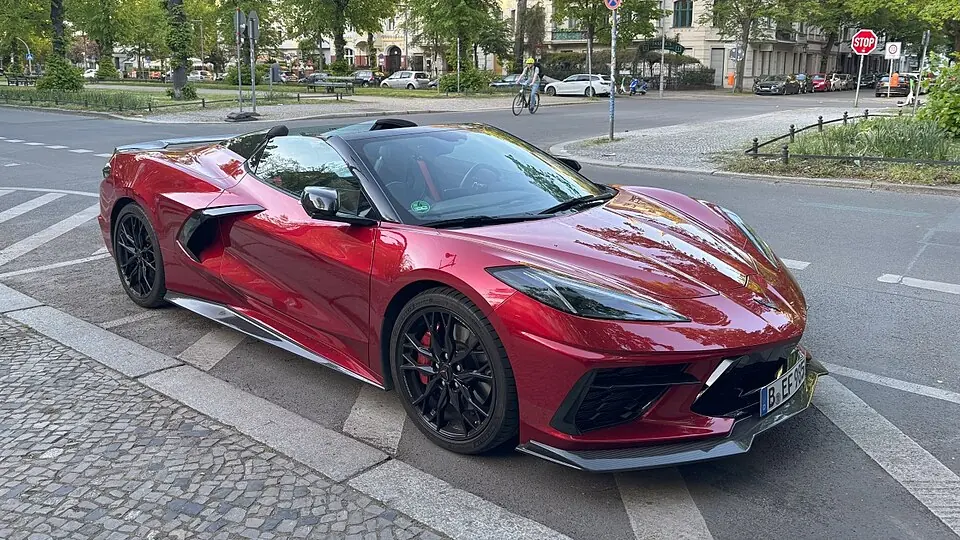
The Corvette Stingray brings a mid-engine layout and a naturally aspirated V8 at a lower price than many rivals. Its two luggage compartments make it easier to use regularly.
Specifications
| Body Style | Mid-engine sports coupe or convertible |
|---|---|
| Engine / Powertrain | 6.2-liter naturally aspirated LT2 V8 |
| Horsepower | 490 hp; up to 495 hp with performance exhaust |
| Torque | 465 lb-ft standard |
| Fuel Economy | 16 city / 25 highway / 19 combined mpg (Stingray coupe) |
| Transmission | 8-speed dual-clutch automatic |
| Drivetrain | RWD |
| Seating | 2 |
| Cargo Space | 12.6 cu ft total (Stingray coupe) |
| Starting MSRP | $68,300 (Stingray 1LT coupe, before destination) |
Overview
The 2025 Corvette Stingray gives buyers the core architecture of the eighth-generation Corvette: a V8 behind the seats, rear-wheel drive and a dual-clutch automatic. Chevrolet offers it as a coupe with a removable roof panel or a convertible with a powered roof. This review focuses on Stingray grades, which have their own engine and pricing. Chevrolet also sold the E-Ray, Z06 and other specialist variants, whose extra hardware changes the mission and the budget.
For most buyers, the first decision is which roof fits their use. The second is how much interior and camera equipment they need. The engine location and basic performance make the entry 1LT relevant to both decisions.
Performance & Fuel Economy
The 6.2-liter LT2 V8 produces 490 horsepower in its standard specification. The optional performance exhaust raises the rating to 495, and the eight-speed dual-clutch transmission is the only gearbox. Drivers attracted to the car by the idea of a stick shift should determine whether the paddles and the automatic's behavior supply enough engagement in everyday conditions.
The EPA lists the Stingray coupe at 19 mpg combined, including 25 on the highway. Shop the Z51 package for its combined hardware value if you plan regular performance use. Braking, cooling, tires and related equipment matter more for repeated demands than the small difference in power between the base and performance exhaust configurations.
Interior, Comfort & Technology
Chevrolet divides luggage between a front compartment and another space behind the engine. Together they offer up to 12.6 cubic feet in the coupe. The available volume has two separate shapes, so bulky pieces that fit a typical trunk may need to be split into smaller bags. In coupe form, the roof panel can occupy part of the rear cargo area when removed. Try storing it before assuming the total volume is available at the same time.
The cabin puts many controls near the driver. The passenger sits on the other side of a raised console, so the seating position and ability to use common functions feel unusual. Try the seat fit with the door only partly open and try climate, navigation and camera controls with the roof in both positions.
Safety & Driver Assistance
The Stingray's short forward profile and wide rear quarters take practice in narrow spaces. The 2LT gives shoppers a path to additional camera and assistance features, including useful views that help with parked obstacles close to the nose. The value of that equipment is easier to demonstrate on a ramp or at a curb than it is on a feature comparison table.
A used model's options can determine whether its front lift is present, and that can matter if the buyer has a sharply angled driveway. Verify the factory equipment list for the actual car and find a safe approach that lets you understand how much clearance you will have.
Verdict: Who Should Buy It
Choose a 1LT coupe to keep the core Stingray drivetrain at the lowest entry price. A 2LT is worth trying when the camera upgrades and everyday comforts make the car genuinely easier to use. The 3LT focuses on additional interior treatment. People who want a powered roof and prefer its luggage arrangements should test the convertible instead of assuming the coupe roof will be effortless to move alone.
The Stingray offers a strong combination of two-seat performance and travel utility if you plan around two modest luggage compartments and the width of the body. Put your normal parking and cargo demands first. Those are the circumstances most likely to determine whether the Corvette goes out once a month or several times each week.
Pros and cons
Pros
- Mid-engine V8 design at an accessible price within its class
- Choice of removable-panel coupe or powered convertible
- Two storage areas allow practical packing for two
Cons
- No manual transmission option
- Coupe roof panel uses some rear luggage room when stored
- Broad rear bodywork can make tight parking harder
Trim levels and pricing
| Trim | U.S. MSRP | Key equipment |
|---|---|---|
| Stingray 1LT Coupe | $68,300 | Standard LT2 V8 and removable roof panel |
| Stingray 2LT Coupe | $75,400 | Adds more comfort equipment and useful camera features |
| Stingray 3LT Coupe | $80,050 | Additional upscale cabin materials and detailing |
| Stingray 1LT Convertible | $75,300 | Base equipment with a power-retractable roof |
Frequently asked questions
Can the Corvette Stingray be ordered with a stick shift?
No. The 2025 Stingray uses an eight-speed dual-clutch transmission.
Where do I put the coupe roof panel when removed?
The removable panel stores in the rear compartment, where it takes space that could otherwise hold luggage.
Is 495 horsepower standard?
The standard LT2 rating is 490 hp. Chevrolet lists 495 hp with its performance exhaust.