SUVs / U.S. model
2025 Toyota RAV4 Review
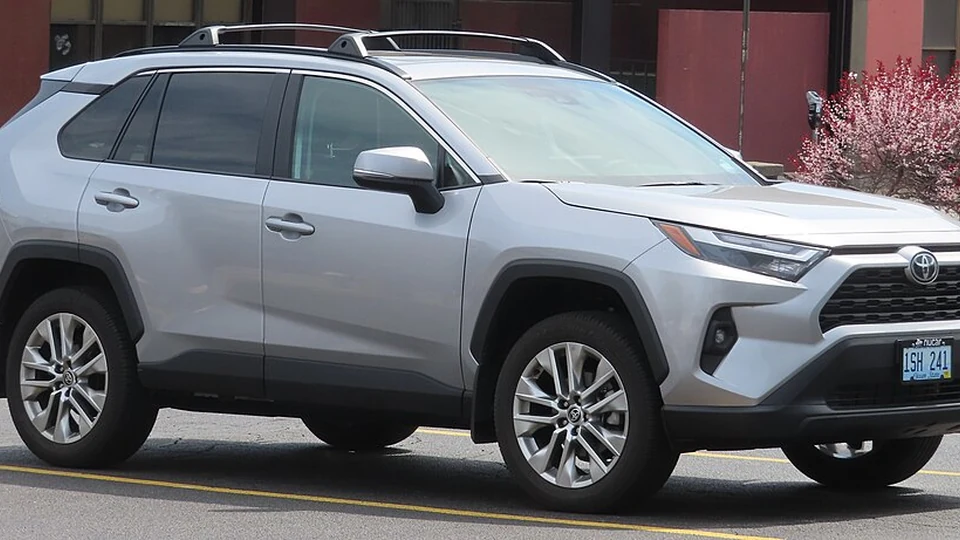
The gas RAV4 pairs a conventional automatic with a spacious cargo area and a useful base equipment list. The XLE adds conveniences most buyers will notice every day.
Specifications
| Body Style | Compact SUV |
|---|---|
| Engine / Powertrain | 2.5-liter naturally aspirated inline-four |
| Horsepower | 203 hp |
| Torque | 184 lb-ft |
| Fuel Economy | 30 mpg combined (LE FWD) |
| Transmission | 8-speed automatic |
| Drivetrain | FWD or AWD |
| Seating | 5 |
| Cargo Space | Approximately 37.5 cu ft behind rear seats |
| Starting MSRP | $28,850 (LE FWD, before destination) |
Overview
The 2025 RAV4 brings one of the clearest arguments for a compact SUV: it fits five, carries a small household's gear and costs less in base form than the equivalent Toyota hybrid. Toyota offered gas, hybrid and plug-in versions for this model year. This review covers the four conventional gas grades, which share an engine and transmission. The fifth-generation body remains familiar, so a shopper gets more leverage from comparing actual equipment than from studying exterior styling. The 2025 gas lineup also drops Adventure and TRD Off-Road, leaving the available all-wheel-drive system as the main functional traction choice.
The shape is compact enough for a crowded parking structure and squared off enough to make the load space useful.
Performance & Fuel Economy
The naturally aspirated 2.5-liter four makes 203 horsepower and 184 pound-feet, with an eight-speed automatic. On a short merge with three passengers, an engine that makes its peak power higher in the rev range needs time and space to get there. Drivers who mostly use neighborhood streets and commuter highways have little reason to pay for a capability they rarely need.
A front-drive LE is rated at 30 mpg combined. Other wheel and drivetrain combinations carry different ratings, so compare the label on the exact vehicle. AWD is worth pricing if the route includes steep weather-exposed streets or frequent loose surfaces. It adds purchase cost and takes away part of the economy advantage over a larger SUV.
Interior, Comfort & Technology
At around 37.5 cubic feet behind the rear seat, the RAV4 makes room for club sports equipment or a stroller while keeping both rows in use. The split-folding rear seat makes it easy to carry a longer box with one rear passenger. Lift the load floor and check where your particular cargo mat sits, since Toyota's volume figure describes a test measurement rather than the shape of an individual case or crate.
The dashboard keeps controls within easy reach, with a conventional gear selector and separate climate controls. Toyota's infotainment supports wireless phone projection. Standard and available screens differ by grade, so check the one in front of you in direct sunlight and with a route active.
Safety & Driver Assistance
Toyota Safety Sense 2.5 includes a forward collision warning and braking system with pedestrian detection, lane assistance and adaptive cruise control. Those functions are present even if you spend only at the LE level. The XLE is worth checking if you value blind-spot monitoring and rear cross-traffic alert for reversing out of a driveway with limited visibility. Verify the installed equipment rather than counting on a dealer listing to identify every package.
Advance through the settings during a test drive and learn which chimes and displays indicate a detected hazard. Some buyers care more about an understandable alert than an extra assistance feature they rarely switch on.
Verdict: Who Should Buy It
Start with the XLE if several people will use the car. An available power liftgate and easier daily seat adjustments matter more in that situation than the extra trim on the Limited. The LE is an attractive choice when the lowest initial price matters and most journeys are solo. An XLE Premium may be worthwhile if its upholstery and other conveniences replace extras you would have bought separately.
High-mileage commuters should get a quote for the RAV4 Hybrid as well. Compare the out-the-door difference using the type of driving you actually do. The regular RAV4 is strongest as an everyday utility vehicle when you specify it to match your real traction and cabin needs.
Pros and cons
Pros
- Useful cargo shape with the rear seats in place
- Straightforward eight-speed automatic and no charging routine
- Driver assistance included on the least expensive trim
Cons
- Engine must rev for brisk passing with a full cabin
- Gas AWD trims leave a smaller fuel-economy gap to rivals
- Adventure and TRD Off-Road absent from the gas lineup
Trim levels and pricing
| Trim | U.S. MSRP | Key equipment |
|---|---|---|
| LE FWD | $28,850 | Cloth seating, 8-inch multimedia display and standard Toyota Safety Sense 2.5 |
| XLE FWD | $30,360 | Power-adjustable driver seat and dual-zone climate control |
| XLE Premium FWD | $33,250 | SofTex upholstery and upgraded convenience equipment |
| Limited FWD | $37,155 | Top gas grade with the upgraded cabin and a larger multimedia display |
Frequently asked questions
Is this the same powertrain as the 2025 RAV4 Hybrid?
No. The gas model has a 203-hp four-cylinder and eight-speed automatic. The separate hybrid powertrain pairs an engine and electric motors.
Can the gas RAV4 be ordered with AWD?
Toyota offered AWD across the gas grades for model year 2025.
How many people and how much luggage can it carry?
It seats five, with about 37.5 cubic feet behind the second row and a split rear seat that opens more space.