Sedans / U.S. model
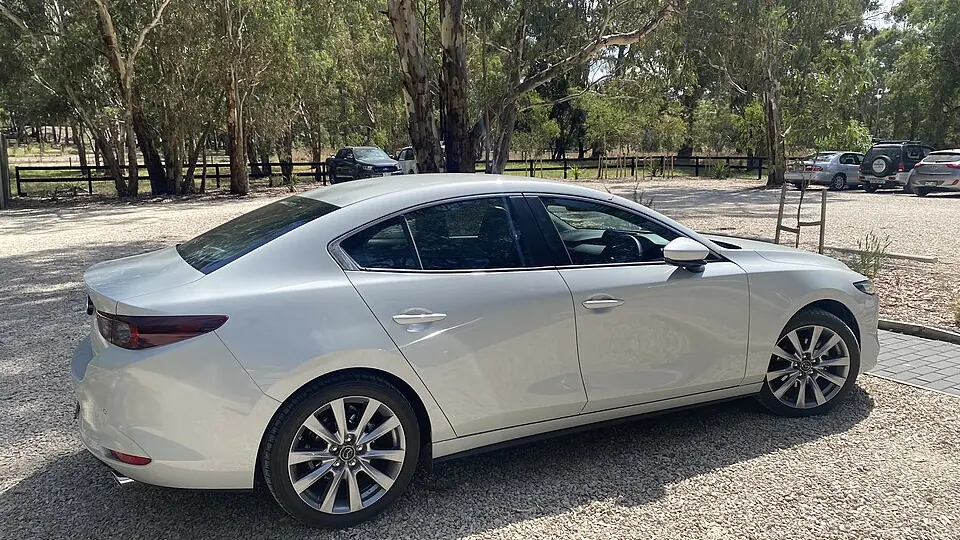
2025 Mazda Mazda3 Sedan Review
Mazda's compact sedan has a well-detailed cabin and a strong standard engine. All-wheel drive is available, and a turbo version pushes the price into larger-sedan territory.
Specifications
| Body Style | Compact sedan |
|---|---|
| Engine / Powertrain | 2.5-liter four-cylinder, naturally aspirated or turbocharged |
| Horsepower | 191 hp base, 227 hp turbo on 87 octane, 250 hp on 93 |
| Fuel Economy / Range | 31 mpg combined for 2.5 S FWD |
| Transmission | 6-speed automatic |
| Drivetrain | Front-wheel drive or all-wheel drive |
| Seating | 5 |
| Cargo Space | 13.2 cu ft in trunk |
| Starting MSRP | $24,150 before destination |
A compact sedan with a distinct cabin
There is a notable amount of choice beneath the Mazda3 Sedan's single silhouette. The entry 2.5 S is a front-wheel-drive compact for buyers who want to keep the bill low. An all-wheel-drive Carbon Edition retains the basic engine and adds distinctive trim. At the top, a pair of turbo versions changes both the price and the way the car puts its power to the road. The Sedan is the one to consider if you prefer the separation, shape and outward view of a traditional trunk. Mazda sells a hatchback alongside it, with some different configurations. Check the body style on any listing before comparing an advertised price or a list of standard equipment.
The 191-hp engine makes a strong case
The 2.5-liter four makes 191 horsepower and 186 pound-feet of torque without a turbocharger. Mazda pairs it with a six-speed automatic in the sedan. That is particularly appealing to buyers who prefer discernible gear changes to the behavior of a continuously variable gearbox. The turbo brings a substantially larger torque figure and standard all-wheel drive. On regular 87-octane fuel it makes 227 horsepower. The advertised 250 requires 93 octane, so performance shoppers should consider what they intend to put in the tank. The front-drive base car carries an EPA combined rating of 31 mpg. Added driven wheels and turbo power have running-cost implications, especially for long commutes driven mostly at steady speeds.
Physical controls, limited rear space
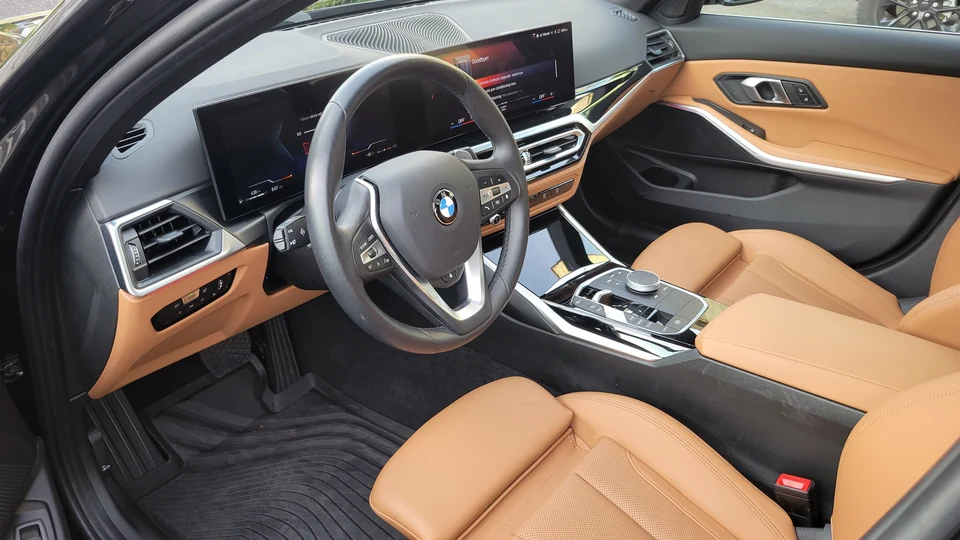
The dashboard stays relatively simple. The basic 8.8-inch display sits high in the dash and the controller falls near the driver's hand. Mazda supplies Apple CarPlay and Android Auto, while certain higher trims add wireless phone projection and a larger screen. The seats and trim make an especially good first impression in the Preferred and Carbon configurations. Space is where the compact footprint is most apparent. The 13.2-cubic-foot trunk is reasonable for groceries and typical carry-on luggage. In the rear cabin, a tall driver can leave substantially less room for another tall passenger. Families using a rear-facing child seat should install it during a test drive to see whether the front passenger still sits comfortably.
Parking aids and driver assistance
Even the base Mazda3 includes adaptive cruise control with stop-and-go capability, blind-spot monitoring and rear cross-traffic alert. As a result, the inexpensive car retains a number of the features most likely to matter in traffic or in a supermarket parking lot. Higher trim equipment broadens the assistance menu. The Turbo Premium Plus, for example, adds a surround-view parking camera and further parking assistance. Check the mirrors by doing a real lane change and assess the camera display after dark if that is when you normally drive. The more useful distinction for many owners is between a warning that gets their attention and a screen that gives them a better view of the kerb.
Where the four-door Mazda3 fits
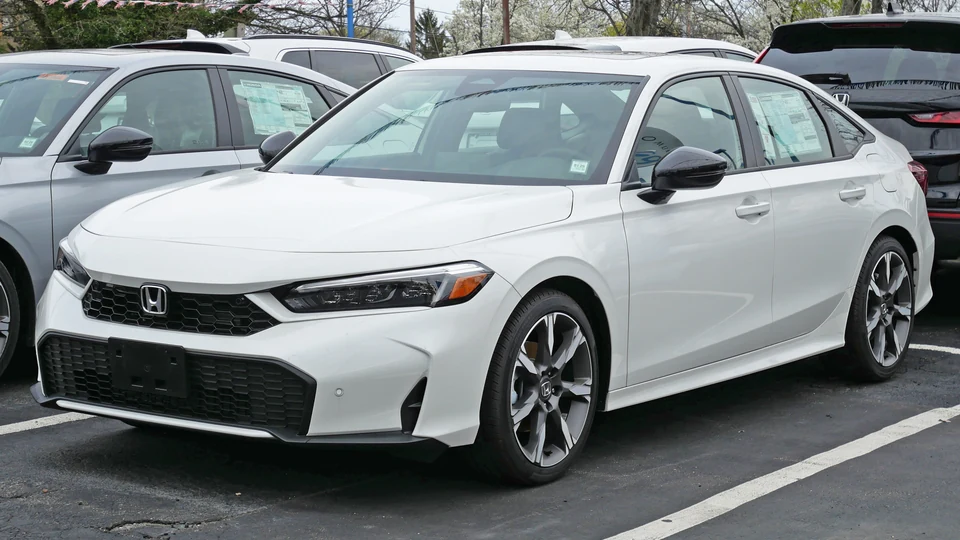
The 2.5 S Preferred is a sensible target if heated front seats and an adjustable driver's seat matter more than extra power. The front-drive base version is a better value for buyers who want compact dimensions and already like the standard furnishings. Choose Carbon Edition when you want all-wheel drive and can skip the turbo. Paying for the Turbo Premium Plus can put the sedan close to larger or more specialized cars, so reserve that version for a buyer who really wants the acceleration and technology in this small footprint. For a household that routinely fills the back seat, test the Civic or a midsize Accord during the same weekend. An appealing driver's seat is easier to enjoy when the other passengers fit too.
Pros and cons
Pros
- 191 hp in the entry sedan
- Front- or all-wheel-drive availability
- Good standard driver-assistance selection
- Conventional six-speed automatic
Cons
- Rear seating is tight for tall adults
- Turbo's top output requires 93 octane
- No manual transmission in the sedan
Trim levels and pricing
| Trim | U.S. MSRP | Key equipment |
|---|---|---|
| 2.5 S | $24,150 | 191-hp front-drive base sedan with an 8.8-inch display |
| 2.5 S Preferred | $26,540 | Heated front seats, moonroof and power driver's seat |
| 2.5 S Carbon Edition | $29,610 | All-wheel drive, red leather and wireless phone projection |
| 2.5 Turbo Premium Plus | $36,000 | Turbo AWD, Bose audio and surround-view camera |
Frequently asked questions
Can I get a manual 2025 Mazda3 Sedan?
No. Mazda reserves the 2025 six-speed manual for a hatchback configuration.
Is all-wheel drive available without the turbo?
Yes. The 2.5 S Carbon Edition has all-wheel drive and the naturally aspirated engine.
What fuel is needed for the 250-horsepower rating?
Mazda specifies 93-octane gasoline for 250 hp and rates the turbo at 227 hp on 87 octane.