Sports / U.S. model
2025 Nissan Z Review
Nissan's 400-hp Z Sport is a direct route to twin-turbo rear-drive power. Performance and NISMO add hardware with different benefits for regular roads and tracks.
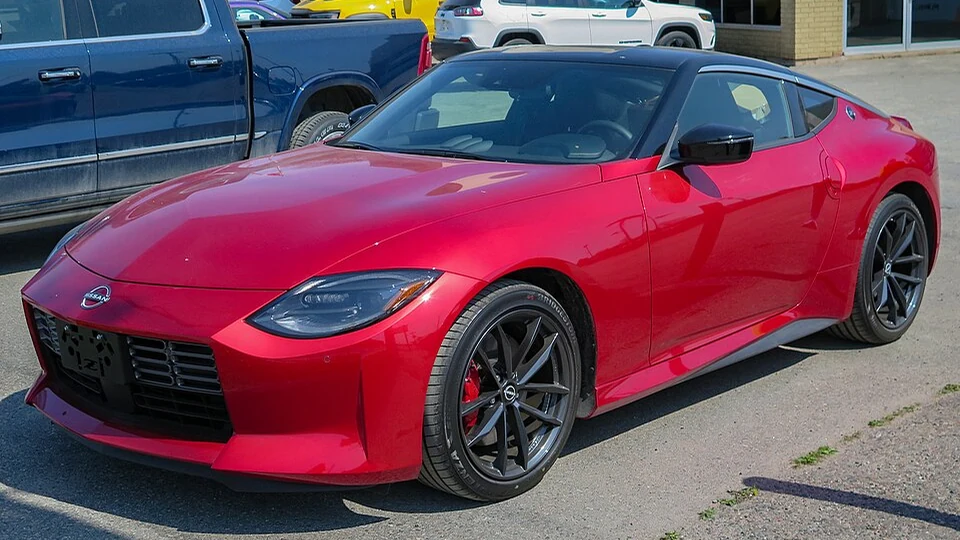
Specifications
| Body Style | Two-seat sports coupe |
|---|---|
| Engine / Powertrain | 3.0-liter twin-turbo V6 |
| Horsepower | 400 hp (Sport and Performance); 420 hp (NISMO) |
| Torque | 350 lb-ft (Sport and Performance); 384 lb-ft (NISMO) |
| Fuel Economy | 18 city / 24 highway / 20 combined mpg (Sport/Performance manual) |
| Transmission | 6-speed manual or 9-speed automatic; NISMO automatic only |
| Drivetrain | RWD |
| Seating | 2 |
| Cargo Space | 6.9 cu ft (Sport) |
| Starting MSRP | $42,970 (Sport, before destination) |
Overview
Nissan built the 2025 Z around a relatively traditional set of decisions: two seats, rear drive, a strong gasoline engine and the option of a manual. Sport starts with 400 horsepower, the same rated output as Performance. The latter uses part of the price increase for differential, tire and brake hardware alongside a higher cabin specification. NISMO moves to more power and a different chassis tune, with the automatic as its only gearbox.
The shape distinguishes the Nissan from smaller, low-torque coupes and several four-seat rivals. Its hood takes up much of the view and the seating is low. The point of the Z's size is felt even before accelerating, so test whether its driving position works on an ordinary street.
Performance & Fuel Economy
Sport and Performance use a twin-turbo 3.0-liter V6 rated at 400 horsepower and 350 pound-feet. The six-speed manual and nine-speed automatic have the same base MSRP at those levels. Nissan lists 20 combined mpg for the manual and 22 for the automatic. The 420-hp NISMO raises torque to 384 pound-feet and puts the transmission response and track-oriented hardware foremost. It is rated at 19 combined mpg.
Performance is worth exploring if you want the mechanical limited-slip differential and associated brake and tire upgrades. Those additions give it something a regular Sport does not share even though the two are rated at the same power. Consider braking feel and ride with any aftermarket wheels already installed.
Interior, Comfort & Technology
The front occupants have an instrument screen and a distinctive set of dash gauges high in the middle. Nissan upgrades the screen and audio on Performance. For first-time visitors, the useful priority is access. Getting into the seat and settling your elbows should be easy in the width of the spaces where you park. The reach to the shifter and climate controls is worth checking in the same position.
Nissan measures 6.9 cubic feet of cargo room in the Sport. The hatch can ease loading of small bags, but the shallow space and absence of rear seats put a real ceiling on luggage. Measure the floor from the hatch and factor in the seat position and where a soft case can sit.
Safety & Driver Assistance
Nissan's driver aids include forward collision braking, blind-spot warning and rear cross-traffic monitoring equipment. Test the camera and visibility on the actual build if you routinely reverse between tall vehicles. The sight line by the Z's rear pillar can take time to learn, and a warning is one extra signal alongside the mirrors and a careful direct view.
The amount of torque also makes tire condition a real used-car question. Inspect the tread and confirm the fitted type on all four wheels before basing a purchase on a quick drive. Higher-grade tires tend to have a more specific intended temperature and surface range. Consider that when deciding if the Z would be your only year-round car.
Verdict: Who Should Buy It
Sport manual is the sensible choice if you want full regular-engine output at the entry price and see shifting as part of owning the car. Performance earns a drive when its differential, brakes and interior features match your priorities. NISMO is a different purchase. Its extra power and track-centered changes are most useful to someone who actively wants them and prefers the automatic.
The 2025 Z will appeal to buyers who enjoy a strong twin-turbo sports car and can live with its two-seat packaging. Price the practical necessities first, including replacement tires and whether you fit comfortably. Then choose the level of chassis equipment you can use on your normal roads.
Pros and cons
Pros
- 400 horsepower even on Sport
- Manual and automatic have the same entry MSRP on regular grades
- Performance includes meaningful differential and brake upgrades
Cons
- Two seats and limited luggage space
- NISMO has no manual option
- Sport and Performance price difference is substantial
Trim levels and pricing
| Trim | U.S. MSRP | Key equipment |
|---|---|---|
| Z Sport | $42,970 | 400-hp V6, six-speed manual or nine-speed automatic |
| Z Performance | $52,970 | 400 hp plus rear limited-slip differential and upgraded hardware |
| Z NISMO | $65,750 | 420 hp and dedicated chassis equipment; nine-speed automatic only |
Frequently asked questions
Does the Z Sport have 400 horsepower?
Yes. Both Sport and Performance have a 400-hp twin-turbo V6 in U.S. specification.
Can the NISMO be ordered with a manual?
No. Nissan offers the 2025 NISMO only with its nine-speed automatic.
Is this a two-seater?
Yes. The U.S. 2025 Z has two seats in every trim.