Sedans / U.S. model
2025 Hyundai Sonata Review
The Sonata spans an affordable gas sedan, a 47-mpg hybrid and a 290-hp N Line. The SEL alone offers the option of all-wheel drive.
Specifications
| Body Style | Midsize sedan |
|---|---|
| Engine / Powertrain | 2.5-liter four, 2.0-liter hybrid or 2.5-liter turbo four |
| Horsepower | 191 hp gas, 192 hp hybrid system or 290 hp N Line |
| Fuel Economy / Range | 32 mpg combined SE, 47 SEL Hybrid, 27 N Line |
| Transmission | 8-speed automatic, 6-speed hybrid automatic or 8-speed dual-clutch |
| Drivetrain | Front-wheel drive, optional all-wheel drive on SEL |
| Seating | 5 |
| Cargo Space | 15.6 cu ft in trunk |
| Starting MSRP | $26,900 before destination |
One shape, three jobs
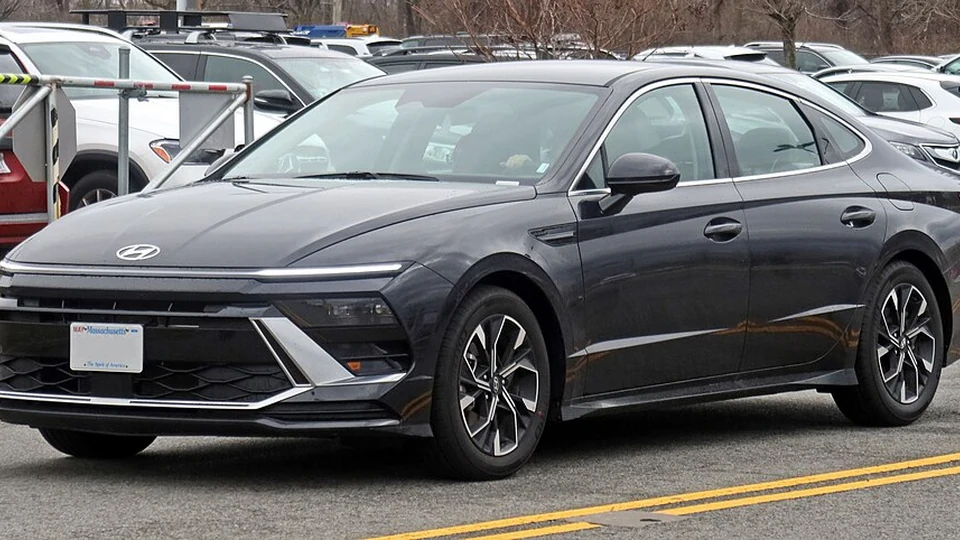
Hyundai's Sonata shares a low roof and full-width lighting signature across the range, but the models underneath are aimed at different customers. The SE returns as the low-cost gas sedan for 2025. The SEL can add all-wheel drive. Hyundai also sells two hybrids and an N Line tuned around a much stronger turbo engine. Consider the typical week you need the car to cover before making a trim shortlist. A driver who deals with slow urban traffic can reap the hybrid's efficiency, whereas an owner who sees snow and values traction may prefer an AWD SEL. If you are shopping mostly on original price, include the SE from the start. Its simpler configuration preserves many of the model's practical features.
Fuel-sipping and fast are separate choices
SE and SEL use a 191-horsepower 2.5-liter engine and a conventional eight-speed automatic. The front-drive SE is rated at 32 mpg combined. The hybrid substitutes an electrified 2.0-liter powertrain and a six-speed automatic, and the SEL Hybrid earns a 47-mpg combined rating. A 290-horsepower turbo engine and an eight-speed dual-clutch transmission distinguish the N Line. It has front-wheel drive, so buying the quickest Sonata does not buy the extra traction of the AWD SEL. Those configurations also call for very different tire budgets. The economy versions make a better first stop for households that burn through highway miles, while the N Line offers a much stronger case for somebody who enjoys midrange acceleration on quiet roads.
A broad dashboard and a separate trunk
The 12.3-inch infotainment display gives the center of the Sonata a clear focal point, and wireless phone integration helps reduce the time it takes to start directions. Equipment varies around the main screen. The SEL Convenience, for example, adds a digital instrument cluster and a panoramic sunroof, while the Limited Hybrid is a better prospect if you care about higher-end seating and parking technology. Hyundai retains a separate climate-control area beneath the screen, which makes frequent adjustments easier to find. The trunk's footprint is useful for family luggage. You will still have to lift bags over a rear sill, and the low rear roof is worth checking if you regularly carry taller relatives or need a specific child seat angle.
Useful assistance at the entry trim
Even the SE includes several Hyundai SmartSense systems. Adaptive cruise with stop and go, blind-spot warnings and lane assistance cover situations encountered on normal commutes. Shoppers comparing an SE and Limited should ask which conveniences they will actually use. A surround-view image and blind-spot video are distinct features from a warning light, and some drivers find the cameras especially valuable in a cramped apartment garage. Confirm their equipment on the specific car. IIHS publishes an independent 2025 Sonata safety assessment, with the details broken out by test and equipment. Read the test results if crash performance is a purchasing factor, and check vehicle history if any camera, windshield or bumper has been replaced.
The $31,000 decision
Start with the SEL Hybrid if the most compelling alternatives on your list are a Camry or Accord Hybrid. It combines the fuel-saving powertrain and good cabin equipment without requiring the Limited's higher original MSRP. The SEL Convenience works better if your driving and fuel costs favor the standard engine and you place a high value on its instrument display and roof. For a driver who wants more shove and a distinct interior, the N Line is an appealing sedan to compare with a traditional sport trim from another brand. Its lower fuel economy makes the ownership decision clearer. The most persuasive Sonata is the one with the powertrain you want, even if that puts you in a less expensive trim than you expected.
Pros and cons
Pros
- 47 mpg combined in SEL Hybrid
- 290-hp N Line offers a distinct powertrain
- Available AWD on gas SEL
- Broad standard assistance features
Cons
- AWD limited to the gas SEL
- N Line's larger tires and gas engine raise running costs
- Rear roof profile can limit entry room
Trim levels and pricing
| Trim | U.S. MSRP | Key equipment |
|---|---|---|
| SE | $26,900 | 191-hp front-drive sedan and 12.3-inch center display |
| SEL | $28,000 | Heated front seats and optional all-wheel drive |
| SEL Hybrid | $31,250 | 192-hp hybrid system and 47 mpg combined |
| N Line | $35,500 | 290-hp turbo and eight-speed dual-clutch transmission |
Frequently asked questions
Which 2025 Sonata offers AWD?
The gasoline SEL is the only 2025 Sonata with an all-wheel-drive option.
Is the Sonata N Line a hybrid?
No. The N Line uses a 290-hp turbo gas engine.
Which Sonata uses the least fuel?
The SEL Hybrid is EPA-rated at 47 mpg combined, higher than the other 2025 Sonata trims.