Sports / U.S. model
2025 Subaru BRZ Review
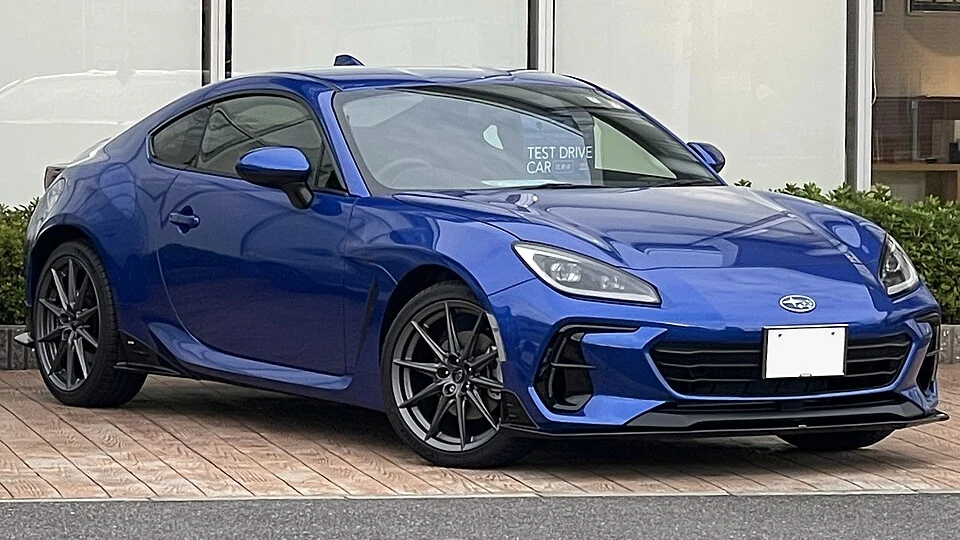
The 2025 BRZ uses a compact body and a low-mounted boxer engine. The tS offers a different brake and suspension package for buyers with a clear use for it.
Specifications
| Body Style | Compact sports coupe |
|---|---|
| Engine / Powertrain | 2.4-liter naturally aspirated flat-four |
| Horsepower | 228 hp |
| Torque | 184 lb-ft |
| Fuel Economy | 20 city / 27 highway / 22 combined mpg (manual) |
| Transmission | 6-speed manual; 6-speed automatic available on Limited |
| Drivetrain | RWD |
| Seating | 4 nominal |
| Cargo Space | 6.3 cu ft trunk |
| Starting MSRP | $33,210 (Premium, Subaru 2025 trim comparison) |
Overview
The BRZ is the unusual Subaru whose basic appeal depends on rear-wheel drive. For 2025 it remains a compact four-place coupe with a low-mounted boxer engine and a choice of focused equipment. The Premium is the most straightforward manual car, the Limited can be configured with the automatic, and the tS adds upgraded dampers and Brembo brakes to a manual-only package. Subaru shares the car's underlying development with Toyota's GR86, and buyers considering either should check the exact tires and seat fit alongside the trim price.
The BRZ is best understood as a compact car that responds to small inputs. Its moderate size is an everyday advantage if you live on a narrow street or want a clearer sense of where the wheels are.
Performance & Fuel Economy
The familiar 2.4-liter flat-four delivers 228 horsepower and 184 pound-feet. To use the engine's full capacity you have to let it rev, which suits drivers who enjoy working through the gears. A six-speed manual is the main offering. Subaru lists an optional six-speed automatic on the Limited for buyers who want the chassis without repeated clutch use.
EPA estimates for the manual are 20 mpg city and 27 highway. The automatic earns 21 city and 30 highway. Compare tS with the other versions for its brake and suspension equipment, not for a power increase. The core mechanical formula and engine output stay the same. Make time to see how each set of wheels and tires behaves on the rougher parts of your route.
Interior, Comfort & Technology
A low seat, short reach to the controls and compact cabin shape define the space from inside. The usable front-seat room means two people can take a longer trip, as long as they bring baggage that fits the modest trunk. The rear seats are best used selectively. Their seatback folds to extend the floor, making it possible to work around the shape of the trunk opening with flexible equipment.
Subaru offers an 8-inch multimedia display with support for phone integration. Learn where audio, maps and climate controls appear before worrying about other instruments. Try your usual footwear in the manual car, as pedal spacing is an issue you can settle in a few minutes even before the test ride.
Safety & Driver Assistance
Subaru offers EyeSight assistance and includes the system on 2025 manual grades as well as on the automatic configuration. The manual has a different operating context from an automatic during close traffic or at a stop. Ask how the functions behave with your gearbox, then check the dashboard alerts while a salesperson explains them. Available support includes adaptive cruise control and collision assistance.
Higher grades can add visibility-related equipment, but the view through the glass and mirrors is what you will use most. Compare the back window and rear camera in a parking space. The narrow body is helpful for placement, though rising rear bodywork can conceal smaller objects close behind the car.
Verdict: Who Should Buy It
The Premium is the strongest starting point if you want the everyday character of the car at the lowest price. The Limited is useful for drivers who value added amenities or an automatic. The tS is for shoppers who value its chassis and brake differences enough to spend more. Find out whether comparable tires and brakes fit the way you plan to use the car, particularly in cold weather.
Buy a BRZ after confirming that two people and their regular gear can use the space without frustration. Its combination of a straightforward engine, tidy footprint and multiple purposes for the back of the cabin makes it easier to justify than a performance figure alone.
Pros and cons
Pros
- Low, compact rear-drive chassis
- Manual and automatic versions share the 228-hp engine
- tS adds meaningful suspension and brake upgrades
Cons
- Rear seat has little passenger room
- Modest trunk and low entry height
- Automatic limited to one trim
Trim levels and pricing
| Trim | U.S. MSRP | Key equipment |
|---|---|---|
| Premium | $33,210 | Base six-speed manual with shared boxer engine and EyeSight |
| Limited | $35,860 | Upgraded equipment with available automatic |
| tS | $38,360 | Manual-only car with STI-tuned dampers and Brembo brakes |
Frequently asked questions
Does the 2025 Subaru BRZ have AWD?
No. The U.S. 2025 BRZ is rear-wheel drive throughout the range.
Is the tS engine more powerful?
No. Its changes include brakes, suspension and equipment. The engine remains the 228-hp 2.4-liter flat-four.
Can the BRZ be bought with an automatic?
Yes. Subaru offers a six-speed automatic on the Limited. The Premium and tS use the manual.