SUVs / U.S. model
2025 Subaru Outback Review
Subaru's familiar low-roof AWD formula remains practical for people who regularly load bikes, dogs or skis. Choose the engine and suspension for the terrain you actually cover.
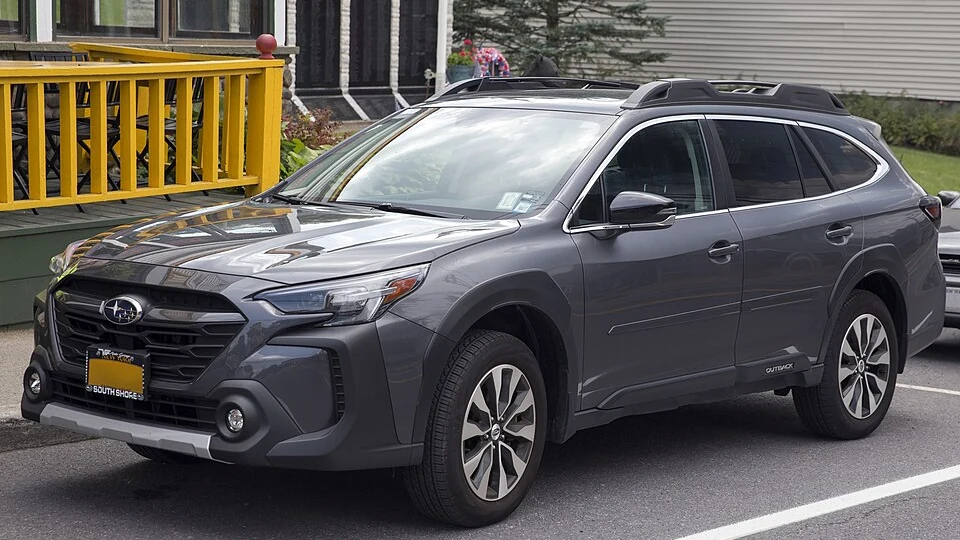
Specifications
| Body Style | Wagon-style crossover |
|---|---|
| Engine / Powertrain | 2.5-liter flat-four or 2.4-liter turbo flat-four |
| Horsepower | 182 hp standard; 260 hp turbo |
| Fuel Economy | 26 city / 32 highway mpg (2.5-liter) |
| Transmission | Continuously variable automatic |
| Drivetrain | AWD |
| Seating | 5 |
| Cargo Space | 32.6 cu ft behind rear seats; 75.6 cu ft maximum |
| Ground Clearance | 8.7 in standard; 9.5 in Wilderness |
| Starting MSRP | $29,995 (Base, before destination) |
Overview
The 2025 Outback takes a useful middle position between a high-roof SUV and a conventional wagon. The sitting position and standard clearances are higher than in a road-focused wagon, while the roof remains within reach when you have to lift equipment over your head. Subaru gives every trim all-wheel drive. A long, level-looking load area and a split rear seat give the car a reason to be considered by people who spend weekends outdoors, even if they drive paved roads the rest of the time.
The main choice is between the straightforward base engine, an ordinary turbo model and the Wilderness. Each uses the same broad body shape, with meaningful differences in gearing, tires, clearance and fuel consumption.
Performance & Fuel Economy
The naturally aspirated 2.5-liter engine makes 182 horsepower. It has a 26 mpg city and 32 mpg highway rating, which is a sensible starting point for buyers who travel long distances and rarely tow. Its CVT can keep the engine at higher revs under sustained load. Try a highway entry or an uphill stretch with a representative set of passengers if you are deciding whether the base engine is enough.
The 260-hp 2.4-liter turbo is available on XT grades and the Wilderness. Subaru gives turbo versions a higher towing ceiling of up to 3,500 pounds when properly equipped. The Wilderness pairs extra clearance and all-terrain tires with an EPA rating of 21 mpg city and 26 highway, so its capability has a measurable fuel cost.
Interior, Comfort & Technology
There are 32.6 cubic feet behind the rear seats and a substantial 75.6 with them folded. Set the driver's seat first, then test whether bulky luggage lies flat or needs to rotate past the hatch opening. The wagon profile suits long objects, and splitting the seat provides a way to keep one or two rear seats when a full-length item takes part of the load space.
On the Premium and most higher grades, Subaru fits an 11.6-inch portrait center display. It is a different interface from the base model's twin screens. Before choosing, change the cabin temperature and fan while navigating. Controls for common functions are spread between the screen and surrounding buttons, and the ergonomics matter more than the diagonal measurement.
Safety & Driver Assistance
Subaru EyeSight brings adaptive cruise, lane assistance and pre-collision braking to the lineup. Camera-based functions depend on a usable view through the windshield. In a region that sees frequent road spray, keep the area in front of the cameras clear and learn the dash message that signals limited operation. AWD helps the car put power down, while tire grip still controls much of the available braking.
Blind-spot and rear cross-traffic alerts are available beginning with selected Premium equipment and included on higher grades. Confirm the exact package if you are shopping used. The Wilderness also has a front-view camera, which is relevant when a crest or uneven trail blocks your sight line near the nose.
Verdict: Who Should Buy It
Premium is the first comparison point for buyers who want the regular engine and more connectivity. An XT grade pays off for passing on two-lane highways at elevation or hauling a load that approaches the base vehicle's limits. Before buying Wilderness, check the depth of the ruts and obstacles on the roads you actually use. A moderate forest access road may be comfortably inside the standard car's capabilities.
The 2025 Outback is easy to justify when the things you carry are long, dirty or awkward to load. Spend time with the cargo floor and roof before you decide, because ease of loading is one advantage you can confirm in a dealer lot.
Pros and cons
Pros
- Standard all-wheel drive and 8.7 inches of base clearance
- Long cargo floor and relatively accessible roof height
- Turbo and Wilderness offer meaningful towing or trail upgrades
Cons
- Base engine has modest power for a fully loaded mountain trip
- Wilderness gives up several mpg on the highway
- Portrait interface requires reaching for some settings
Trim levels and pricing
| Trim | U.S. MSRP | Key equipment |
|---|---|---|
| Base | $29,995 | 2.5-liter engine, AWD and EyeSight assistance |
| Premium | $33,060 | 11.6-inch display, heated front seats and comfort upgrades |
| Wilderness | $41,710 | Turbo flat-four, more clearance, all-terrain tires and added trail equipment |
| Touring XT | $44,730 | Turbo power and the high-end Touring cabin |
Frequently asked questions
How much can an Outback tow?
Subaru lists up to 2,700 pounds for 2.5-liter models and 3,500 for turbo variants when properly equipped.
Does every trim have AWD?
Yes. Every U.S. 2025 Outback has Subaru's standard AWD system.
How is the Wilderness different from the Turbo XT?
It has a turbo engine plus raised ground clearance, all-terrain tires and equipment intended for rough surfaces.