SUVs / U.S. model
2025 Ford Bronco Review
The Bronco earns its place with removable body panels and serious off-road hardware. Its body style, roof and tire choices carry big consequences for everyday use.
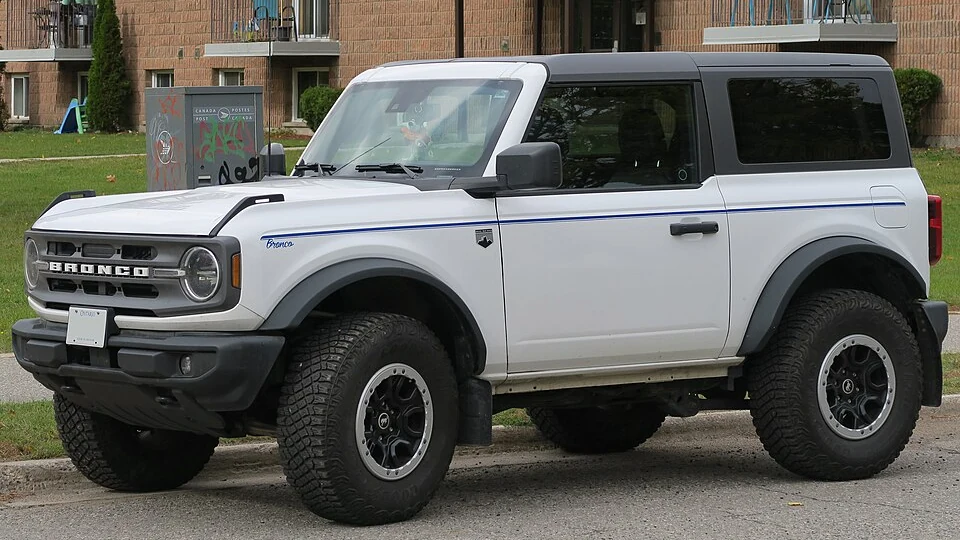
Specifications
| Body Style | Two- or four-door off-road SUV |
|---|---|
| Engine / Powertrain | 2.3-liter turbo four; 2.7-liter turbo V6; 3.0-liter turbo V6 (Raptor) |
| Horsepower | 275–300 hp (2.3L), 315–330 hp (2.7L), 418 hp (Raptor) |
| Fuel Economy | 19 city / 21 highway / 20 combined mpg (2.3L 7-speed 4WD) |
| Transmission | 7-speed manual or 10-speed automatic, depending on engine |
| Drivetrain | 4WD |
| Seating | 4 in two-door; 5 in four-door |
| Cargo Space | Up to 83.0 cu ft (four-door soft top) |
| Starting MSRP | $40,390 (Base, Ford build tool) |
Overview
Few decisions in the Bronco lineup can be made from the trim name alone. The 2025 body-on-frame Ford is available with two or four doors, and the removable roof and doors change how you will store and use it. A two-door puts the rear axle and cargo area closer to the driver, with less room for riders and gear. The four-door makes a much stronger case as a daily vehicle for a household.
There is a wide gap between the returning Base model and a Raptor, even though both carry the same nameplate. Ground clearance, tire size and the transfer case will do more to distinguish one build from another on a rough route than the cabin's trim or audio system.
Performance & Fuel Economy
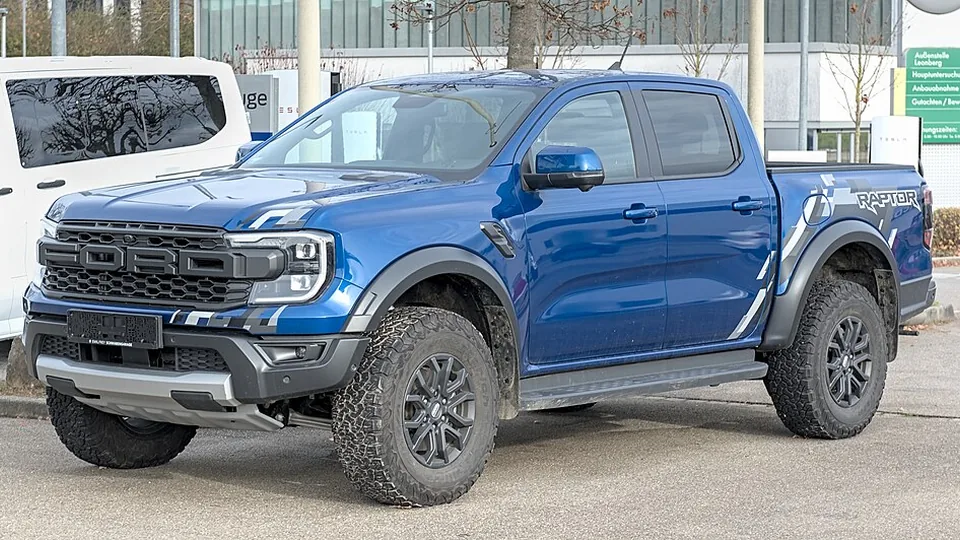
Ford offers a 2.3-liter turbo four, a 2.7-liter turbo V6 and a dedicated 3.0-liter engine in the Raptor. The regular-fuel and premium-fuel numbers differ: the 2.3 makes 275 horsepower on regular and up to 300 on premium, with the 2.7 rated up to 330 horsepower. A seven-speed manual is available on selected 2.3-liter builds, and a ten-speed automatic handles the rest.
The EPA lists 20 mpg combined for a 2.3-liter manual configuration. Because tires and gearing vary, use the configuration-specific economy entry when comparing options. Larger all-terrain tires help on certain surfaces and can change noise, ride and fuel consumption. A regular build is enough for many regularly maintained trails.
Interior, Comfort & Technology
The upright body and widely opening doors give the Bronco a different cabin from a crossover. The side windows and roof are closer to vertical, and the rear hatch is a two-part arrangement with a swing gate. Leave room behind the vehicle before buying. Test where the gate and full-size spare swing if you use a garage or a compact parallel parking space.
The four-door soft-top configuration can open up to 83 cubic feet by Ford's measurement. A two-door holds much less behind its rear seat. People who remove the roof should inspect the storage process and try lifting the panels as appropriate. Your choice between hard and soft tops affects security, cargo access and the character of highway driving.
Safety & Driver Assistance
The rear camera helps when the spare and bodywork fill the driver's rear view. Available driver assistance and camera equipment depend on the trim and package. Certain views are intended to help place the vehicle over uneven terrain. The driver still needs an unobstructed picture of obstacles, especially when a crest or sharp turn hides what is beyond the bumper.
On the road, take note of sight lines at diagonal junctions and on roundabouts. The Bronco's height and square shape suit certain trail tasks, but it is useful to establish how close you can approach a parking kerb or bollard from the seat before purchasing a build with wider tires.
Verdict: Who Should Buy It
Choose Base or Big Bend if open-air driving is the main attraction and you spend more weekends on decent roads than technical routes. Look at Badlands if equipment such as an available front stabilizer bar disconnect aligns with terrain you know well. A Raptor deserves its own price and space comparison; its broad stance and additional hardware can be valuable on open rough ground and awkward on an ordinary narrow street.
The decisive questions are where you will put the roof, how many people need independent doors and how many hours you spend on highways. Answer those before exploring optional trail packages. The Bronco is most persuasive when a buyer values genuine modularity and specific off-road tools.
Pros and cons
Pros
- Removable doors and roof give it a genuinely different driving format
- Manual available with some four-cylinder builds
- Wide choice of trail-oriented hardware
Cons
- Road noise and fuel economy vary considerably by build
- Swing gate and spare require room behind the vehicle
- Two-door cargo volume is limited with all seats up
Trim levels and pricing
| Trim | U.S. MSRP | Key equipment |
|---|---|---|
| Base | $40,390 | Entry four-wheel-drive Bronco, with two- or four-door choices |
| Big Bend | $40,845 | Mainstream four-door grade with broader options |
| Badlands | $49,980 | More dedicated trail hardware and available upgrade packages |
| Raptor | $80,390 | 418-hp V6, wide-track suspension and 37-inch tires |
Frequently asked questions
Is the seven-speed automatic?
No. The seven-speed is a manual available with selected 2.3-liter builds. The automatic has ten speeds.
How many seats are in the Bronco?
A U.S. two-door has four seats and a four-door has five.
How much power comes with the base engine?
Ford lists 275 horsepower on regular fuel and 300 on premium for the 2.3-liter turbo.