SUVs / U.S. model
2025 Hyundai Tucson Review
The Tucson's update puts frequently used controls back in easy reach and preserves a roomy back seat. The gas engine works best for measured everyday driving.
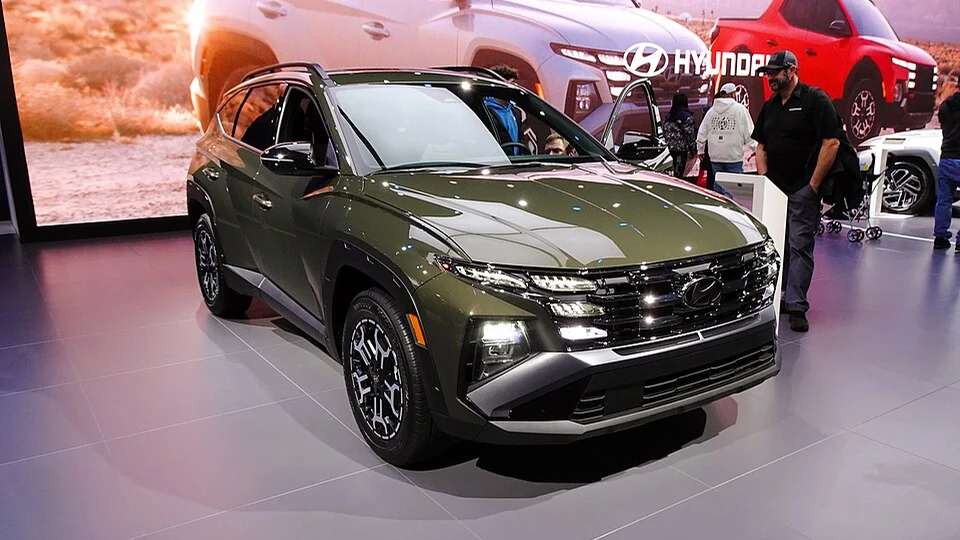
Specifications
| Body Style | Compact SUV |
|---|---|
| Engine / Powertrain | 2.5-liter naturally aspirated inline-four |
| Horsepower | 187 hp |
| Torque | 178 lb-ft |
| Fuel Economy | 25 city / 33 highway / 28 combined mpg (FWD) |
| Transmission | 8-speed automatic |
| Drivetrain | FWD or AWD |
| Seating | 5 |
| Cargo Space | Up to 80.3 cu ft with rear seats folded |
| Starting MSRP | $28,355 (launch SE FWD, before destination) |
Overview
Hyundai put most of its 2025 Tucson update where owners will use it: inside. The 12.3-inch infotainment screen is new to the refreshed layout, and useful physical controls sit below the display. The outside also gets styling changes, but the big reason to see one is whether the driving position and usable back-seat space make it a better fit than another compact SUV.
This review covers the 2.5-liter gas Tucson. Hyundai also offered hybrid and plug-in variants with their own price ladders. A buyer comparing these versions should start with where they drive and park. The standard gas version asks the lowest up-front price, while the hybrid has a stronger argument when you routinely deal with stoplights and slow traffic.
Performance & Fuel Economy
The familiar gas engine produces 187 horsepower and sends it through an eight-speed automatic. It has sufficient capacity for normal errands, and slower acceleration may be more noticeable on a short merge with four people and luggage. Hyundai's hybrid uses a different drivetrain and is worth evaluating directly if frequent passing or fuel consumption could change your decision.
Front-drive gas ratings are 25 mpg city, 33 highway and 28 combined. AWD is available on all five gas grades. It makes sense if the routes to work or a vacation place often have loose gravel or snow, but the EPA highway number and the curb weight will differ. Confirm the exact drivetrain on the window label when shopping a vehicle with a generic dealer title.
Interior, Comfort & Technology
The Tucson has the kind of second row that allows a family to keep a child seat installed and still use the vehicle for routine trips with adults. With the second row folded, Hyundai lists up to 80.3 cubic feet. That figure matters if you carry several bulky things at once, while the height of the hatch opening and the seatback's folded angle matter for individual boxes.
The updated climate layout gives the driver a quicker way to make simple changes. Pair a phone, set a destination and try the audio volume and fan controls in that order. It is a short process, and it helps distinguish a feature list you admire from a cabin you will actually find easy to use.
Safety & Driver Assistance
Forward collision avoidance, lane assistance and attention monitoring are part of Hyundai's safety technology offering. Available higher-level features include more camera views and additional parking assistance. The Limited is the useful comparison if you have a tight parking area and want to see the blind-spot camera view in practice.
Parking cameras and lane aids have different jobs. The rear view helps when you need to leave enough space for a tailgate. Lane assistance is useful when following clear markings at speed. Pull your car into a familiar kind of space on a test drive where possible, and make sure the display is legible and its camera switching makes sense to you.
Verdict: Who Should Buy It
The SEL FWD hits a useful price point with heated front seats, added convenience and the same gas powertrain and cargo package as the higher grades. The SEL Convenience is worth examining if the display and other cabin upgrades matter enough to justify its price. The XRT has distinctive exterior treatment, while the Limited focuses on luxury and parking technology.
People who do a lot of stop-and-go driving should get a comparable hybrid quote. The gas Tucson suits the buyer who values usable rear-seat space, a large cargo area and a modern dashboard. Price the trim with the drive system you need before deciding which nicer features can fit the remaining budget.
Pros and cons
Pros
- Large rear seat and useful maximum cargo space
- Refreshed dashboard gives frequent controls easy access
- AWD available across gas grades
Cons
- Gas engine offers modest passing performance
- Higher-end camera features require a more expensive trim
- AWD uses more fuel than FWD
Trim levels and pricing
| Trim | U.S. MSRP | Key equipment |
|---|---|---|
| SE FWD | $28,355 | Launch MSRP for the base gas trim with a 12.3-inch infotainment screen |
| SEL FWD | $30,215 | Adds heated front seats, power driver seat and hands-free liftgate |
| SEL Convenience FWD | $32,665 | Adds cabin and technology upgrades above SEL |
| Limited AWD | $39,795 | Top gas equipment, upgraded parking views and AWD |
Frequently asked questions
Are gas and hybrid Tucsons the same model mechanically?
They share a body family, but use different engines, transmissions and propulsion hardware.
Can I choose AWD with an SE?
Yes. Hyundai offered HTRAC AWD on the SE and all other 2025 U.S. gas trims.
What is the gas front-drive Tucson's economy rating?
Its EPA rating is 25 mpg city, 33 highway and 28 combined.