SUVs / U.S. model
2025 Jeep Grand Cherokee Review
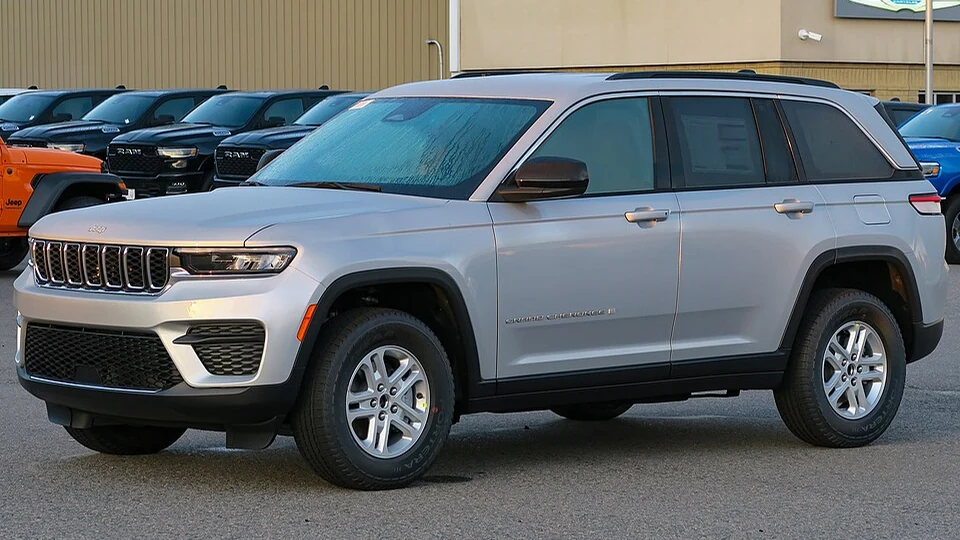
The two-row Grand Cherokee can combine an upscale interior with serious towing and four-wheel-drive options. A midgrade Limited is the place to start for most buyers.
Specifications
| Body Style | Two-row midsize SUV |
|---|---|
| Engine / Powertrain | 3.6-liter naturally aspirated V6 |
| Horsepower | 293 hp |
| Torque | 260 lb-ft |
| Fuel Economy | 19 city / 26 highway / 22 combined mpg (Laredo RWD) |
| Transmission | 8-speed automatic |
| Drivetrain | RWD or 4WD |
| Seating | 5 |
| Cargo Space | 37.7 cu ft seats up; 70.8 cu ft maximum |
| Starting MSRP | $37,035 (launch Laredo 4x2, before destination) |
Overview
The two-row 2025 Grand Cherokee fits a particular shopper: someone who wants real room and capability without automatically adding a third row. Jeep's V6 version has space for five, a useful luggage area and a choice of rear- or four-wheel drive. The company's longer Grand Cherokee L and its 4xe plug-in hybrid share the name but involve different prices and packaging. This review follows the standard-wheelbase gasoline V6.
Several trims can look similar in a list even as the price rises quickly. For a first visit, compare the Laredo and Limited in the same drivetrain. The difference in daily equipment is easier to see before adding the air suspension and larger luxury packages available higher in the range.
Performance & Fuel Economy
The 3.6-liter V6 is rated at 293 horsepower and drives through an eight-speed automatic. In rear-drive Laredo form the EPA combined rating is 22 mpg, which gives a useful baseline for highway and suburb driving. Four-wheel-drive hardware and larger equipment can change operating weight, even when two window stickers show the same nominal engine output.
Jeep lists up to 6,200 pounds of towing for properly equipped gasoline versions. A buyer using that capacity should verify that the vehicle actually has the necessary package and check its payload and tongue-weight requirements. For drivers regularly crossing rutted access roads, decide whether you need a specific transfer case or ride-height control before sorting by paint and upholstery.
Interior, Comfort & Technology
There are 37.7 cubic feet behind the rear seats with the seatbacks in place and 70.8 available when they are folded. That is enough to make a long overland trip with four people a realistic proposition, though a test fit is still worth doing with full-size luggage. The loading floor can feel higher as you move up to taller wheel and suspension configurations, especially when lifting a heavy dog or cooler.
The base Uconnect system takes care of phone projection, and larger displays and premium audio become available farther up the range. The Limited adds a more comfortable specification without jumping all the way to the top trim. Its combination of interior features and straightforward controls deserves an in-person look.
Safety & Driver Assistance
Jeep combines forward collision warning and active braking with standard convenience aids such as blind-spot monitoring. Available camera and parking systems increase as you go up the range. A surround camera can be helpful with the raised hood and tapered rear windows, particularly if a sizable tow hitch will usually stay in place.
Compare what can be seen from the driver's seat when checking an offset driveway and a narrow lane. The standard rear camera covers parking basics, while an optional forward view can have real value when the nose of the Jeep crests a driveway rise. A higher trim is worth selecting for an aid you are likely to use repeatedly.
Verdict: Who Should Buy It
The Laredo is a good basis for drivers who mainly want the V6, room for five and a straightforward way to choose 4WD. A Limited with the preferred drivetrain and the right towing package will meet many households' requirements. Consider Overland or Summit if particular cabin, suspension or assistance features are the reason you want this Jeep.
Cross-shop two-row competitors if you seldom see surfaces that demand four-wheel-drive hardware. When the Grand Cherokee is right, it lets a household use one vehicle for both daily road trips and a trailer or less accessible trailhead. The price of its equipment climbs steeply, so identify the capability your current vehicle lacks and buy around that.
Pros and cons
Pros
- Room for five plus up to 70.8 cubic feet of total cargo space
- Up to 6,200-pound towing rating when properly equipped
- Wide range of road and rough-surface equipment
Cons
- High trim prices climb into luxury SUV territory
- V6 economy is modest against electrified competitors
- Tow and off-road equipment need configuration-specific checking
Trim levels and pricing
| Trim | U.S. MSRP | Key equipment |
|---|---|---|
| Laredo 4x2 | $37,035 | Launch price for the regular rear-drive V6 model |
| Limited 4x4 | $44,905 | Four-wheel drive with upgraded cabin equipment and amenities |
| Overland 4x4 | $56,995 | Higher-end interior and additional suspension or capability equipment |
| Summit 4x4 | $58,560 | More premium cabin and driver-assistance features |
Frequently asked questions
Is the Grand Cherokee a three-row SUV?
The standard 2025 Grand Cherokee seats five in two rows. The longer Grand Cherokee L is the three-row version.
How much can the V6 tow?
Properly equipped V6 versions are rated up to 6,200 pounds. Verify the specific build and trailer loading before relying on the maximum.
Is the Grand Cherokee 4xe covered here?
No. The 4xe is a distinct plug-in hybrid drivetrain. This review covers the 3.6-liter gas V6.